// The Dossier Matrix
Executive Structure
Owner: BlueCo
Chairman: Vacant
Co-Sporting Directors: Paul Winstanley / Laurence Stewart
Club Honors
League Titles: First Division / Premier League (6)
Domestic Cups: FA Cup (8), League Cup (5)
Major European: UEFA Champions League (2012, 2021), UEFA Europa League (2013, 2019)
Continental Set: UEFA Conference League (2025), UEFA Cup Winners’ Cup (1971, 1998)
Global Trophies: FIFA Club World Cup (2021, 2025), UEFA Super Cup (2)
Club Metrics
Founded: 1905
Club Captain: Reece James
Nickname: The Blues
Stadium Capacity: 40,173
Tactical Identity & Game Model
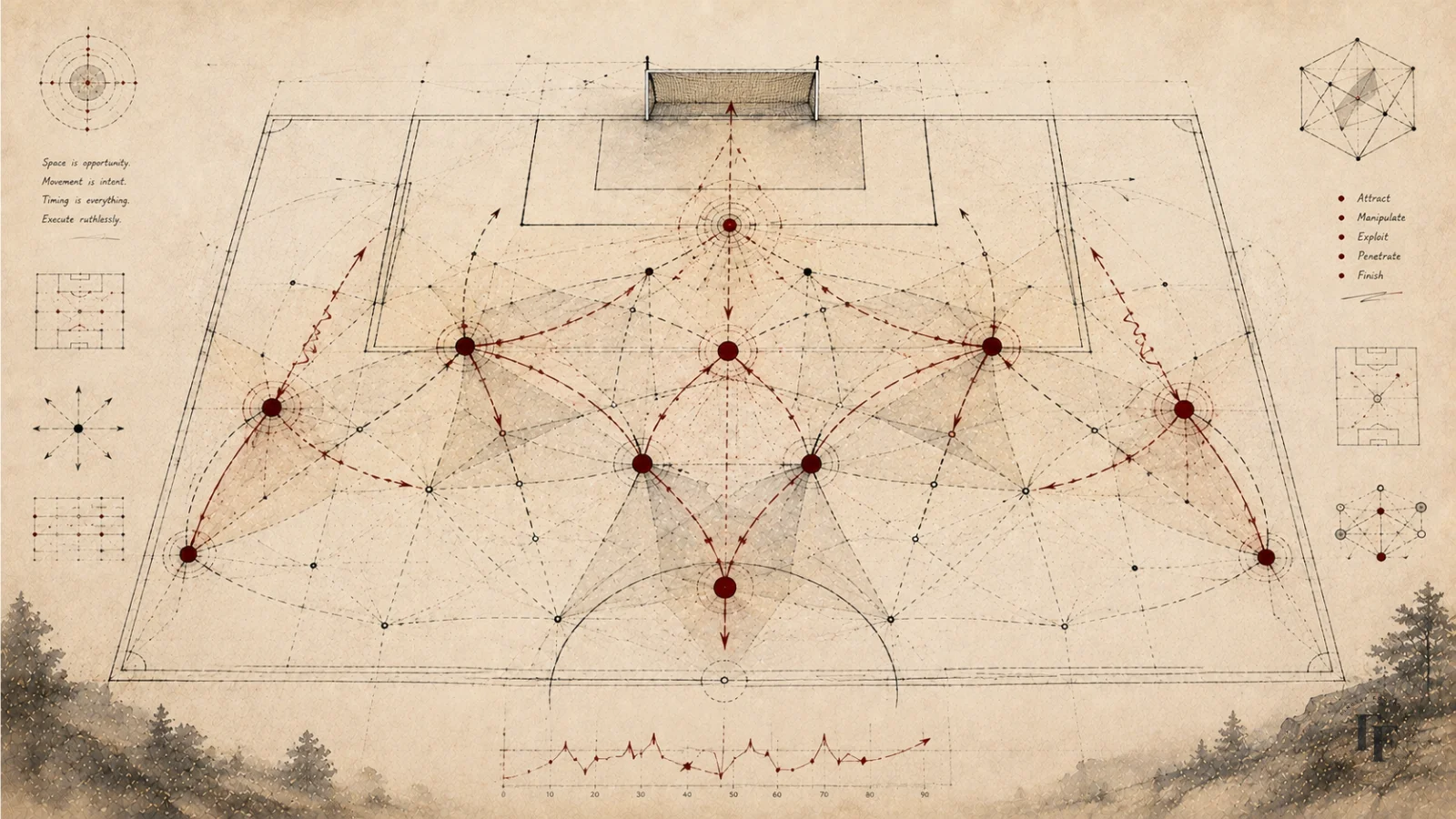
Dynamic central overloading and fluid positional rotations form the backbone of the attacking structure. Rather than adhering to rigid, fixed positions, the system utilizes highly technical attacking midfielders who roam freely within the half-spaces to drag defensive blocks out of alignment. Deep build-up sequences prioritize numeric superiority in the first phase, establishing a heavy possession base to lure opposing presses before slicing lines via rapid third-man combinations. Electric, high-carrying wingers hug the touchlines to exploit the resulting isolation. Rest-defense margins are structurally fluid, relying on hyper-athletic, recovery-paced defensive pieces to secure the pitch during high-risk, vertical transition moments.
Defensively, the tactical setup demands immediate, intense counter-pressing to choke opposition counter-attacks inside the middle third. When the initial press is bypassed, the shape prioritizes defensive compactness, squeezing the space between the midfield and defensive lines to force opponents into low-danger, lateral spaces. Given the natural fluidity of the squad, defensive stability depends heavily on individual physical dominance, requiring center-backs capable of managing wide-open spaces in 1v1 situations.
Roster Construction & Profile Thresholds
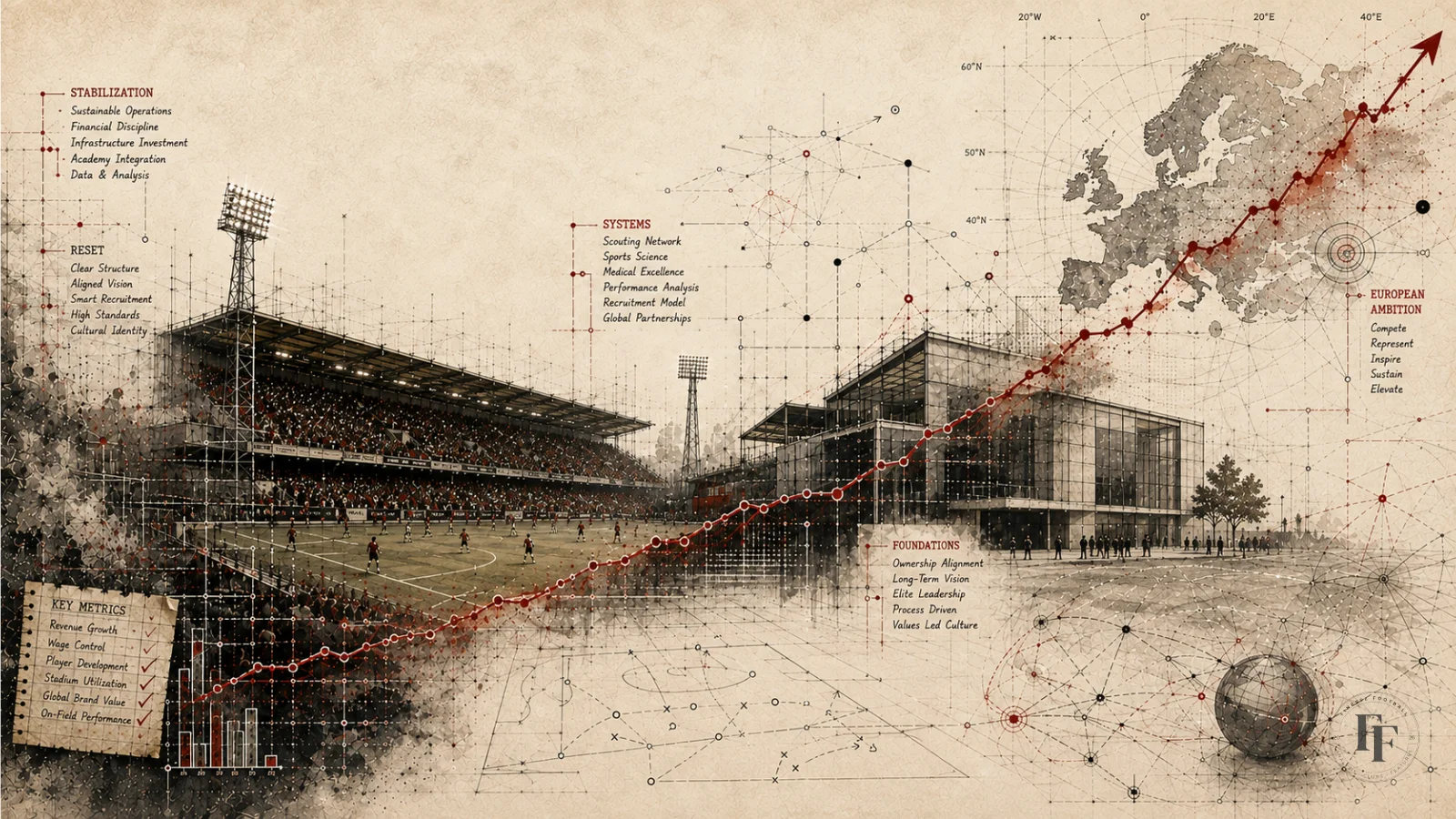
A highly aggressive, long-term asset-acquisition model drives the corporate scouting framework. The recruitment model bypasses established, premium-priced veterans to secure the globe’s elite emerging talent, tying profiles to ultra-long-term contracts to maximize financial amortization. Incoming players must possess supreme multi-functional versatility, capable of thriving across shifting tactical systems and varying managerial styles. Scouting parameters prioritize high emotional stability, mental resilience, and leadership maturity to withstand high-pressure environments and intense squad competition. Physically, targets must possess elite explosive acceleration and high-ceiling athletic profiles to sustain a fast-paced, physical game model.
// Technical Specialists
Tactical Preparation
Sebastián Parrilla – Assistant manager responsible for running senior squad training sessions. He oversees the practical implementation of tactical shapes and aligns daily on-pitch drills with the manager’s core game plans.
Set-Piece Tactics
Austin MacPhee – The first-team set-piece coach tasked with optimizing all dead-ball scenarios. He designs specific offensive blocking routines in the six-yard box and structures defensive positioning during opposition corners.
Match & Opposition Analysis
Beñat Labaien – Technical analyst and assistant manager supporting the first-team coaching staff. His daily role centers on analyzing tracking data from upcoming opponents and converting those performance metrics into instructional video packages for team meetings.
// Positional Archetypes
THE PROGRESSIVE INVERTER
Rather than anchoring a rigid flank or a flat back four, Chelsea’s wide defenders act as dynamic central extra men. This archetype masterfully steps inside from the fullback line during possession phases, creating a temporary box midfield to dismantle opposition mid-blocks.
THE INTERIOR SLIDER
Instead of static wingers locking onto the touchline, the attacking unit relies on highly technical inside forwards. This archetype continuously floats horizontally between the lines, sliding into the half-spaces to link deep build-ups with sudden, vertical central combinations.
THE MARGINAL PINNER
Where traditional target forwards constantly hunt the ball, Chelsea’s central striker plays a highly disciplined positional role. This archetype deliberately pins the opponent’s center-backs deep against their own box, creating a massive pocket of interior space for oncoming midfielders to exploit.
// Historical Benchmarks
Legacy Scorer
Frank Lampard – 211 Goals (2001–2014)
A statistical anomaly operating from central midfield, his record was forged on elite physical durability and a peerless spatial intelligence for late box-arrivals. His goalscoring frequency redefined the tactical output expected of an advanced 8 in the modern English game.
Record Appearances
Ron Harris – 795 Apps (1961–1980)
The ultimate defensive enforcer across two decades, “Chopper” anchored the backline through the high-flair 1970s and subsequent financial reorganizations. His immense appearance total remains virtually untouchable, representing an era of uncompromising, physical defensive resilience.
Iconic Captaincy
John Terry – 717 Apps (2004–2017)
The definitive modern archetype of defensive leadership, directing the team to 15 major honors as the on-pitch commander of Roman Abramovich’s golden era. His elite aerial dominance and flawless structural reading of the game established the defensive floor for Chelsea’s continental successes.
// IDEOLOGICAL ANCHORS
José Mourinho: 2004 – 2007
The pragmatic iconoclast who completely broke the top-flight duopoly, building a ruthless, mathematically flawless defensive machine that secured back-to-back league titles and forged the club’s modern elite winner identity.
Ruud Gullit / Gianluca Vialli: 1996 – 2000
The romantic architects of the club’s continental re-awakening, introducing a sophisticated, multicultural brand of “sexy football” that yielded an iconic European Cup Winners’ Cup and multiple domestic trophies.
Dave Sexton / Tommy Docherty: 1964 – 1974
Defined the cultural “King’s Road” era, combining a stylish, fashionable identity with a fierce, combative tactical edge that culminated in the iconic 1970 FA Cup triumph.