Positional Mastery Part 3: The Attack – The Frontline Predators
A team’s attacking output represents the ultimate culmination of a synchronized game plan. Responsible for direct goal contributions through clinical finishes or decisive final passes, forwards operate in the high-stakes phase of the pitch where matches are ultimately won or lost. Whether operating through central channels or holding width on the flanks, their flair, inventiveness, and ruthlessness consistently capture the imagination of supporters.
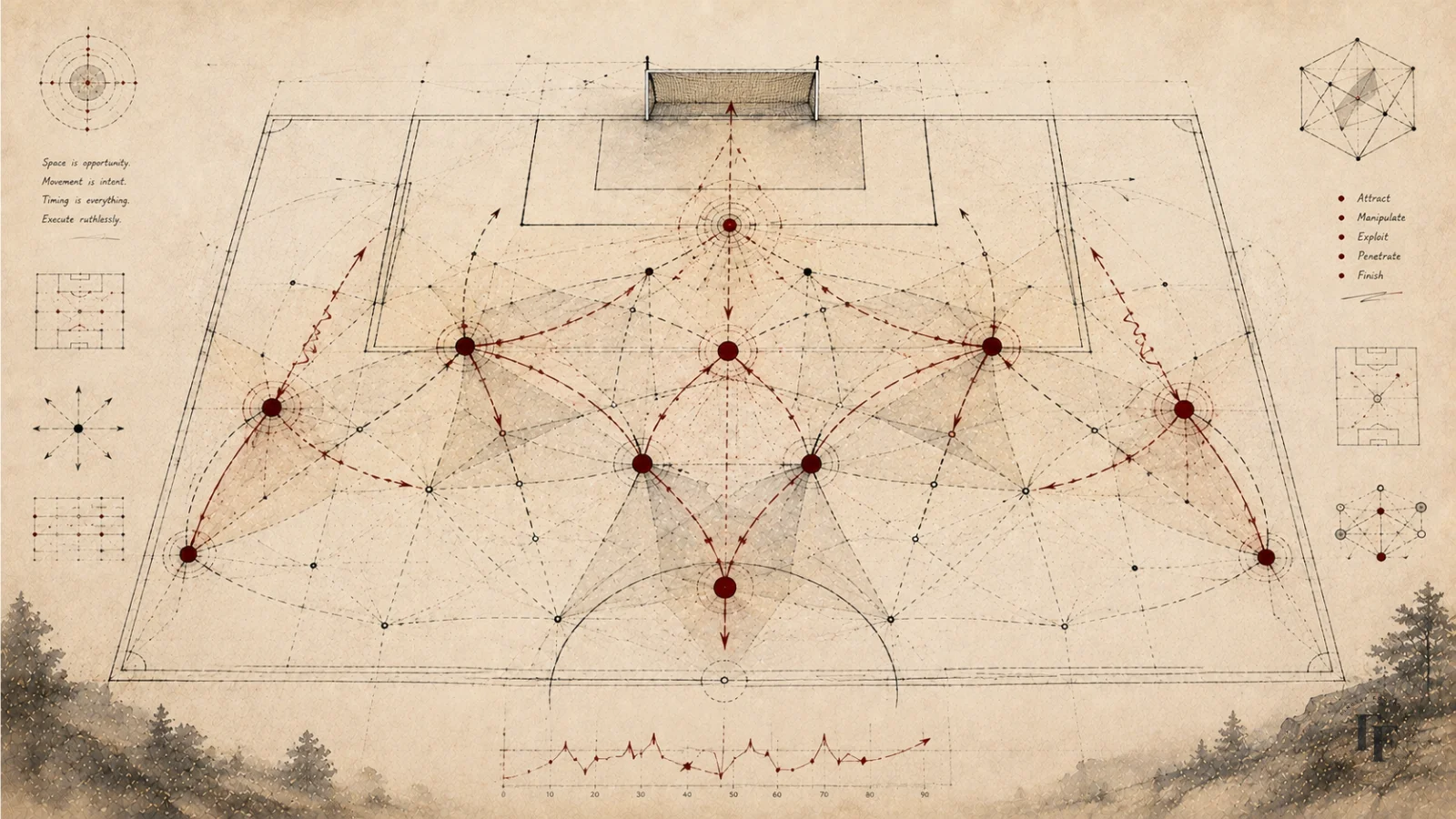
Far from being mere goalscoring outlets, modern forward players serve as vital tactical instruments. Their movement draws out defensive lines, creates spatial channels for arriving midfielders, and converts possessional control into tangible leads. Without an effective frontline to capitalize on structural dominance, even the most meticulous build-up play remains incomplete.
The Center-Forward
The center-forward acts as the primary focal point of the team structure. Charged with occupying central defenders and converting high-value chances inside the penalty box, elite forwards blend ruthless finishing with physical resilience and spatial awareness. While modern tactical frameworks utilize various forward profiles, four central archetypes stand out for their impact and utility.
The Target Man
Physically imposing and dominant in physical duels, the target man acts as a structural outlet for direct or long distribution. Operating with their back to goal, they shield possession under intense pressure from center-backs, holding off defenders to give wingers and central midfielders time to advance up the pitch. Their aerial dominance makes them a constant threat from set pieces and crosses, while their physical presence draws multiple defenders, opening up critical pockets of space in the final third.
Didier Drogba defined this archetype during his iconic tenure at Chelsea. Possessing immense upper-body strength and flawless aerial timing, he routinely bullied elite center-backs, holding up play under pressure and scoring crucial goals on the grandest stages.
The False 9
Functioning as a creative playmaker in a central striker’s starting position, the false 9 manipulates opposition backlines by dropping deep into the central midfield channel. This movement presents opposing center-backs with a dilemma: step out of position to mark the player and leave massive gaps behind, or stay in line and grant the false 9 time to turn and distribute. By drawing defenders out of shape, the false 9 generates spatial channels for wide attackers to make inward runs while creating numerical overloads in midfield.
Roberto Firmino perfected this dynamic role at Liverpool. Through relentless spatial scanning, subtle off-the-ball movement, and unselfish link-up play, he pulled central defenders out of position, serving as the tactical key that unlocked his side’s wide goalscoring threats.
The Poacher
Often described as a specialist in the penalty box, the poacher operates almost exclusively on the shoulder of the last defender. Uninterested in dropping deep to build play or drifting wide to deliver crosses, their sole objective is to convert chances inside the penalty area. They excel at slipping into defensive blind spots, anticipating second balls, and finishing opportunities with minimal touches. Possessing elite acceleration over short distances and sharp instincts, they exploit defensive errors instantly.
Ruud van Nistelrooy stands as one of the most lethal poachers in Premier League history during his spell at Manchester United. A master of movement within the 18-yard box, his explosive reaction time, ruthless composure, and elite positioning allowed him to punish the smallest defensive lapses.
The Advanced Forward
The advanced forward serves as the primary engine for direct, high-tempo attacks. Rather than remaining static in central zones, they constantly test the opposition backline by drifting into the channels between center-backs and full-backs. They feast on passes played into space over the top, using aggressive off-the-ball runs to drag defensive lines back and create room for trailing midfielders. Their combination of high work rate, top-end speed, and versatile finishing makes them a multi-dimensional threat.
Thierry Henry redefined forward play at Arsenal by combining raw pace with extraordinary elegance. Drifting effortlessly into the left channel before driving inward, his elite dribbling, vision, and signature curl into the far corner made him one of the most complete forwards the game has ever seen.
The Wingers
Operating along the touchlines, wingers progress attacking sequences from wide areas, stretching the opposition horizontally and isolating defenders in one-on-one scenarios. Through explosive speed, sharp dribbling, and precise crossing, wide players break down low blocks and diversify a side’s attacking avenues.
The Classic Winger
The classic winger maintains maximum width along the touchline to stretch opposition defensive lines. By positioning themselves near the boundary, they force opposing full-backs into isolated, one-on-one battles away from central support. Once isolating their mark, the classic winger utilizes rapid acceleration and sudden changes of direction to beat the defender down the outside, driving toward the byline to deliver low cutbacks or curling crosses into the penalty box.
Ryan Giggs exemplified the classic wide profile during his legendary career at Manchester United. Operating on the left flank, his electric acceleration, impeccable balance, and lethal crossing at full sprint made him a nightmare for opposing full-backs to contain.
The Inside Forward
Unlike traditional wide players, the inside forward constantly cuts inward from the flank onto their dominant foot, operating effectively as a secondary central striker. Typically deployed on the side opposite their natural foot, they drive directly into the half-spaces and central channels to unleash shots or thread passes through crowded lines. This inward movement opens up wide corridors for overlapping full-backs, creating fluid passing combinations that force center-backs out of position.
Mohamed Salah perfected this wide goalscoring role at Liverpool. Cutting inward from the right flank onto his lethal left foot, his rapid change of direction, physical resilience, and clinical finishing transformed him into one of the most prolific wide attackers in modern football.
The Wide Playmaker
The wide playmaker is an advanced orchestrator stationed nominally on the wing. Lacking the explosive speed of traditional wingers, they receive possession out wide before drifting laterally into central pockets to dictate match tempo with incisive passing. This inward movement acts as a tactical decoy: as they pull the opposing full-back into central zones, they vacate the touchline for their own full-back to attack. Simultaneously, their arrival in central areas creates a heavy midfield density that disrupts opposition defensive structures.
Bernardo Silva embodies this sophisticated wide role at Manchester City. Operating with sublime technical discipline, tight-space composure, and extraordinary spatial awareness, he drifts inward from wide starting positions to retain possession, manipulate defensive shapes, and carve out chances.
The Orchestrators of Magic
At the highest level of football, attackers are the game changers. Operating under the intense pressure of low-margin environments, they bear the ultimate responsibility of turning structural preparation into goals. While defenders and midfielders establish the foundation, forwards provide the decisive moments of magic that elevate a performance from solid to unforgettable. Mastering these wide and central roles separates ordinary sides from champions, giving a team the clinical edge required to turn dominance into victory.
// Editorial Series: Positional Mastery
Vol. 03 – Now Reading
03. The Attack
The Frontline Predators
(Un)laced
A curated look at the moments that mattered alongside stories and insights worth your time.