// The Dossier Matrix
Executive Structure
Owner: Tony Bloom
Chairman: Tony Bloom
Sporting Director: Mike Cave
Club Honors
League Titles: Third Division (3), Fourth Division (2)
Cup Infrastructure: FA Charity Shield (1910), FA Cup Runners-Up (1983)
Modern Milestones: UEFA Europa League Last 16 (2024), Premier League 6th (2023)
Club Metrics
Founded: 1901
Club Captain: Lewis Dunk
Nickname: The Seagulls
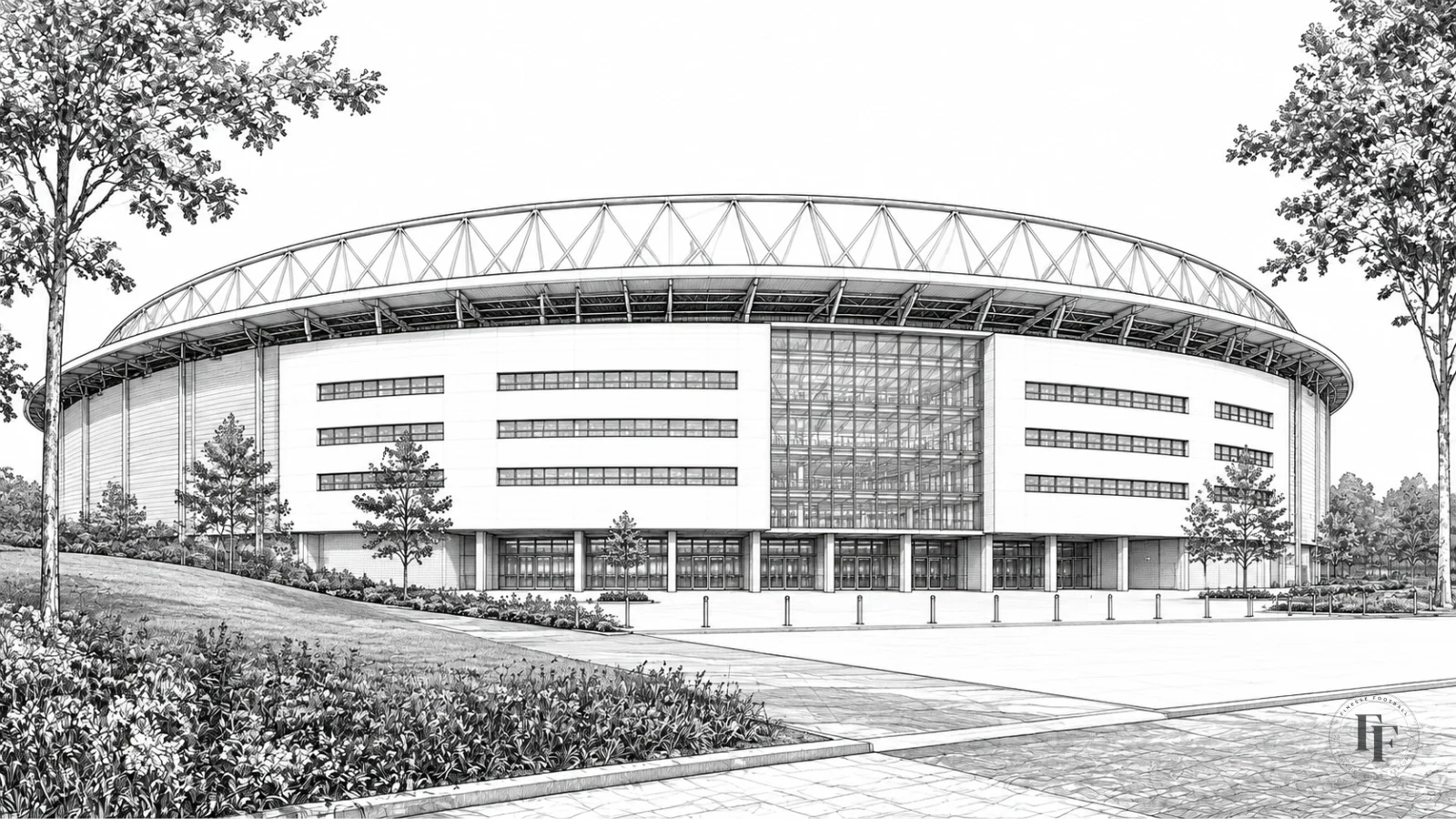
Stadium Capacity: 31,876
Tactical Identity & Game Model
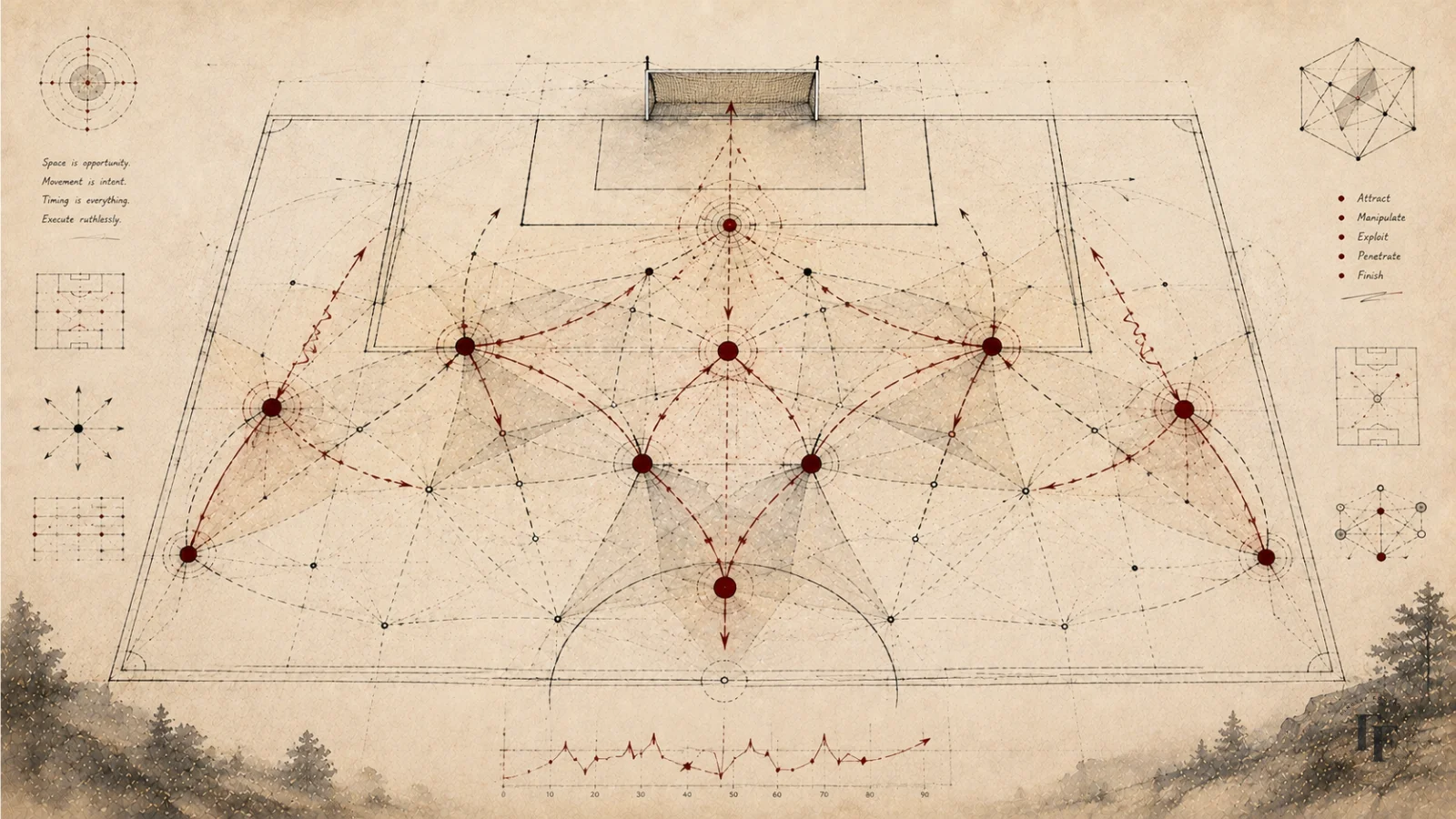
Controlled provocation is the foundation of the possession model. Rather than cycling the ball laterally, deep build-up sequences are deliberately halted, with center-backs placing a sole on the ball to lure the opponent’s press forward. Once the opposition breaks structural shape to engage, rapid vertical combinations, precise wall passes, and third-man rotations immediately puncture the vacated space. The central pivot structure operates with extreme technical security, serving as the main launchpad to transition possession into the final third. Dynamic, high-carrying wingers are positioned on the extreme touchlines, ready to exploit 1v1 isolations once the central combination play forces the defensive block to contract.
Defensive phases are defined by an immediate, highly organized counter-press designed to choke transition opportunities at the source. Players sustain close proximity during the attacking build-up, enabling them to instantly swarm the ball upon loss of possession and lock down progressive lanes. If the initial counter-press is bypassed, the unit quickly morphs into a compact, narrow mid-block. This structure prioritizes central density and relies on hyper-mobile center-backs capable of defending vast expanses of open space behind a high defensive line.
Roster Construction & Profile Thresholds
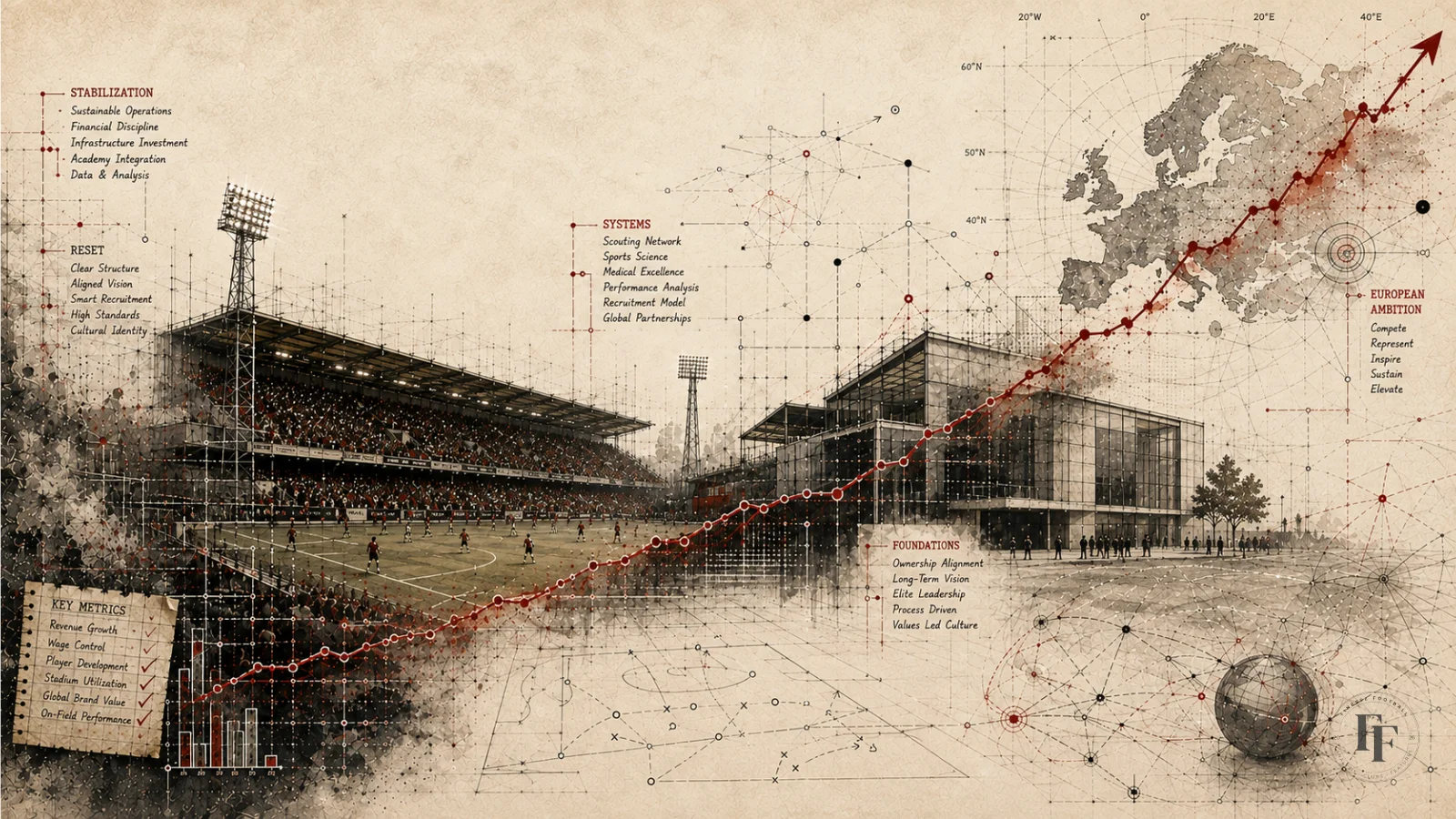
A proprietary, globally integrated scouting intelligence network drives the recruitment model, focusing heavily on predictive data to uncover undervalued talent in emerging markets. Target profiling prioritizes elite technical resistance under high physical pressure, high-frequency progressive passing capacity, and acute spatial intelligence. Physical requirements demand exceptional multi-directional agility, high-volume acceleration, and rapid recovery speed to support the high-line defensive system. Crucially, the scouting framework filters for young profiles possessing elite cognitive processing speeds and a deep capacity for learning, ensuring they can rapidly adapt to highly complex positional demands.
// Technical Specialists
Tactical Preparation
Jonas Scheuermann – Assistant manager charged with planning first-team match strategies and training schedules. He acts as a primary link between tactical analysis and the pitch, with a specific focus on translating game plans into daily squad exercises and overseeing attacking set-play design.
Set-Piece Strategy
Yannick Euvrard – First-team set-piece coach responsible for the design and execution of both offensive and defensive dead-ball routines. He integrates performance and data analysis to identify systemic weaknesses in upcoming opponents and build structured routines to maximize margins from set-plays.
Goalkeeping & Development
Jelle ten Rouwelaar – Goalkeeping coach tasked with managing and developing the senior goalkeeper department. He designs on-pitch drills focused on modern positioning, commands during crossing situations, and composure when executing short, precise ball distribution from the backline.
// Positional Archetypes
THE RESTING ANCHOR
Rather than driving play forward aggressively, Brighton’s deepest pivot remains highly disciplined, anchoring the base of midfield during slow build-up phases. This archetype acts as a central recycling station, circulating safe horizontal passes to manipulate the opposition’s defensive block and control game tempo.
THE TOUCHLINE ISOLATOR
Instead of making early inside channel runs, Brighton’s wingers lock their boots to the white touchline to force maximal width. This archetype stays patient on the flank, pulling opposing fullbacks out of position to create massive interior gaps before engaging in sudden, lethal 1v1 dribbles.
THE BOX DECOY
Where traditional number nines function as pure target men, Brighton’s central striker frequently drops deep into the midfield line, dragging opposing center-backs with them. This movement creates a brief vacuum in the defensive line, allowing tracking inside forwards to exploit the space behind.
// Historical Benchmarks
Legacy Scorer
Tommy Cook – 123 Goals (1921–1929)
A multi-sport elite athlete who spearheaded the Albion attack throughout the 1920s with an exceptional aerial presence and physical dynamism. His century-old scoring milestone remains the official competitive benchmark for the Sussex institution.
Record Appearances
Ernie “Tug” Wilson – 566 Apps (1922–1936)
A high-volume, dynamic left-winger whose devastating crossing ability and tactical consistency defined the club’s interwar era. His extraordinary total of 566 appearances across 14 years represents an ultimate monument to single-club longevity.
Iconic Captaincy
Lewis Dunk – 500+ Apps (2010–Present)
The ultimate homegrown modern icon who captained the club from a nomadic lower-league reality into European football. His world-class passing range out of the back, elite body-blocking metrics, and leadership under pressure make him the definitive emblem of Brighton’s rise.
// IDEOLOGICAL ANCHORS
Roberto De Zerbi: 2022 – 2024
Shook the foundations of European football by introducing a revolutionary possession system based on baiting the opposition press, utilizing deep double-pivots to generate vertical, third-man passing combinations that achieved historic Europa League qualification.
Graham Potter: 2019 – 2022
Deconstructed a rigid, survival-based defensive identity to lay the progressive technical foundations for the club, implementing fluid structural shifts, back-three combinations, and high-volume positional rotations.
Chris Hughton: 2014 – 2019
Restored defensive elite structure and tactical discipline to the Amex Stadium, organizing a highly resilient, low-block 4-4-1-1 unit that achieved the long-awaited automatic promotion and stabilized the club in the top flight.