Positional Mastery Part 2: The Midfield – The Heartbeat of the Team
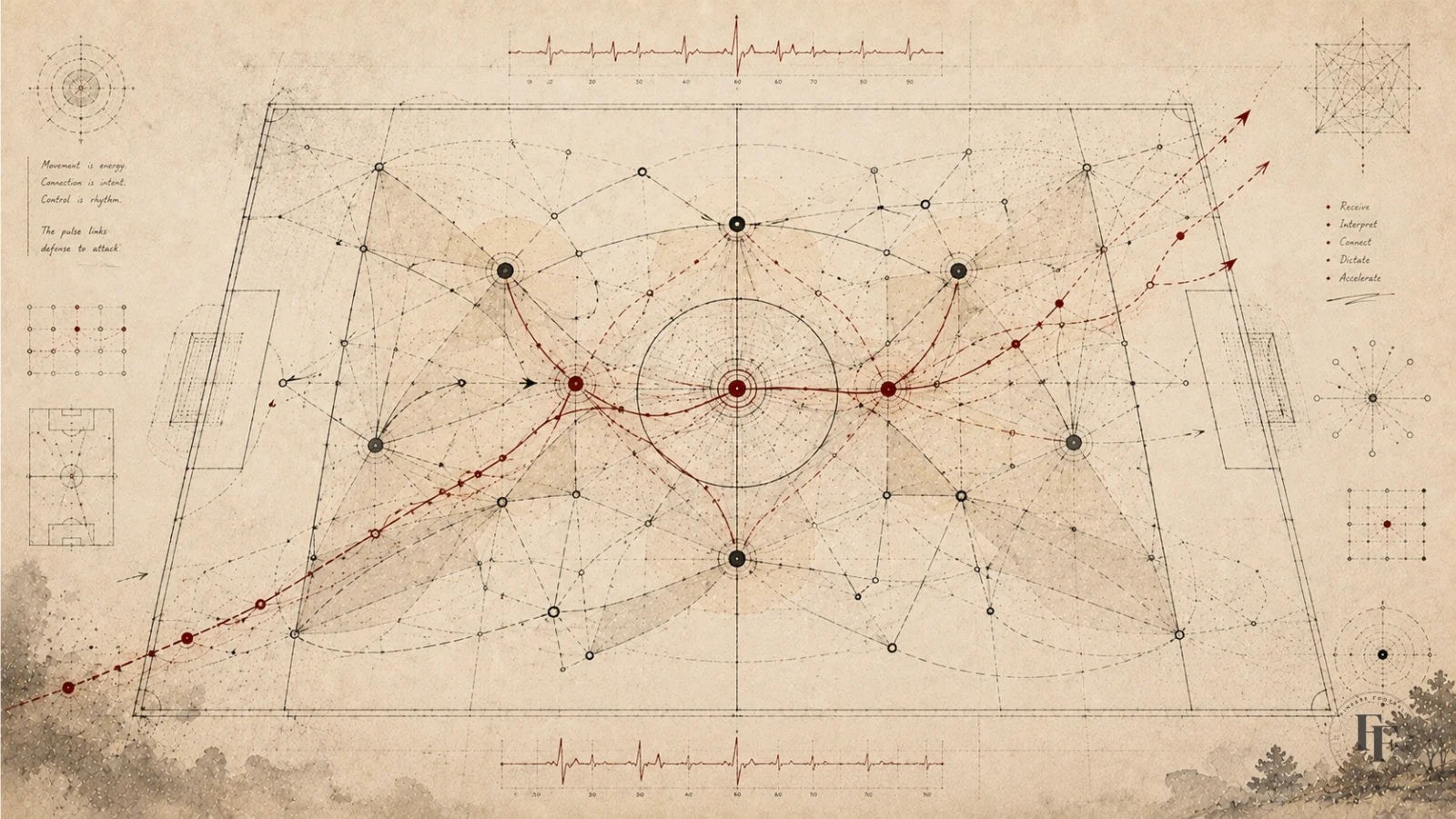
The midfield dictates the terms of engagement. Positioned strategically between the defensive line and the forward line, these players bear the dual responsibility of thwarting opposition transitions while simultaneously advancing their own side’s attacking schemes. Through intelligent spatial movement and calculated anticipation, midfielders preserve tempo and establish a match’s underlying rhythm. They are the tactical anchors required to turn a manager’s structural vision into effective execution on the pitch.
Unlocking the full potential of a midfield system requires an understanding of distinct positional profiles. Deploying a player in their optimal tactical role ensures that their natural attributes are fully maximized. A specialist defensive midfielder, for example, cannot simply be swapped into an advanced attacking role without compromising structural efficiency; each sub-role within the unit demands an uncompromising set of physical, technical, and psychological traits. While the modern game features a wide variety of tactical functions, elite top-flight sides consistently rely on a few core midfield archetypes to achieve structural equilibrium and pitch control.
The Defensive Midfielder
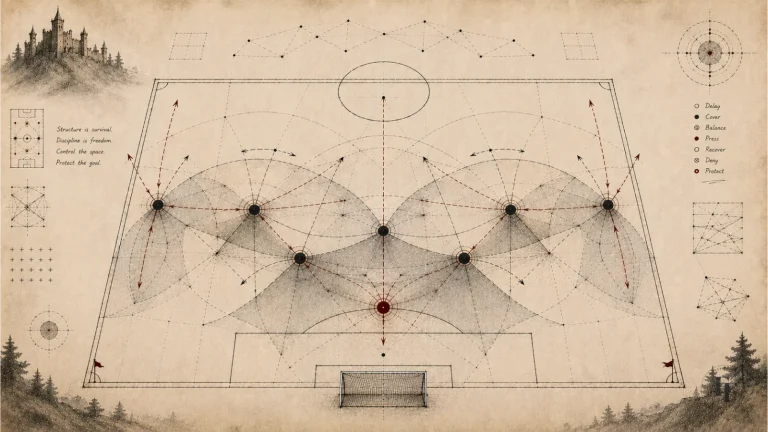
Positioned directly ahead of the back line, the defensive midfielder operates as a structural shield. Functioning effectively as a final layer of protection before the center-backs are directly exposed, their primary task is to delay opposition counter-attacks, restrict central passing lanes, and force dangerous sequences into less threatening, wide areas of the pitch. By choking central space, they compel opponents to reset play laterally or recycle the ball backward.
Operating in this space demands superior tackling mechanics, exceptional lower-body balance, and rapid press-resistance to distribute the ball out of high-density areas. Rather than pursuing high-risk, expansive passes, the defensive midfielder focuses on calculated possession recovery and immediate distribution to unmarked teammates. They operate two to three steps ahead of the current action, possessing total environmental awareness before taking a first touch.
Rodri represents the modern gold standard of this role, blending composure under pressure with exceptional reading of opposition movement. He secures possession and immediately executes an exit pass before the defensive block can adjust.
Roy Keane and Patrick Vieira historically redefined the profile in the Premier League. Their assertive, physical presence established the benchmark for holding midfielders, forcing opposition attacks into cautious, hesitant decision-making. Their individual duels anchored one of the most compelling and defining midfield rivalries in top-flight history.
The Deep-Lying Playmaker
Often occupying the number six region, the deep-lying playmaker operates from deep within their own half to control the tempo of a match. Utilizing spatial awareness and an expansive passing range, they dictate the flow of play and initiate rapid vertical transitions from deep positions.
These players act as the field generals of the team, using subtle body shape and spatial scanning to bypass opposition pressing schemes. They often invite pressure intentionally, drawing opponent blocks forward before launching sharp, diagonal passes into vacated space. Their elite first touch allows them to absorb incoming contact, shield the ball without committing fouls, and maintain possession in heavy traffic.
Xabi Alonso remains a masterclass example of the deep-lying playmaker. Operating from deep areas, his exceptional long-range passing accuracy transformed defensive recoveries into immediate counter-attacks, setting the operational standard for deep playmaking in modern European football.
The Central Midfielder
Operating in the middle third, the box-to-box midfielder connects every phase of play. Positioned equidistant between defense and attack, these players act as the dynamic cogs of the team structure. In possession, they offer reliable passing outlets to break through opposition blocks; out of possession, they compress space to aid the defensive unit. They are the versatile tactical multi-tools of the pitch, comfortable handling duties in both penalty areas.
Physical stamina is the core foundation of the position, allowing central midfielders to cover massive territory across 90 minutes. Beyond endurance, they display calm decision-making in tight spaces, possess elite spatial scanning, and execute crisp forward passes into the attacking line. When direct forward avenues are closed, they maintain possessional rhythm with smart lateral distribution. Furthermore, their threat is amplified by elite ball-striking ability, making them dangerous when arriving late at the edge of the box.
Steven Gerrard stands as the definitive modern box-to-box midfielder. Renowned for driving his team forward, he combined tireless running across every blade of grass with incisive, line-breaking passes and lethal long-range goal-scoring capability.
The Attacking Midfielder
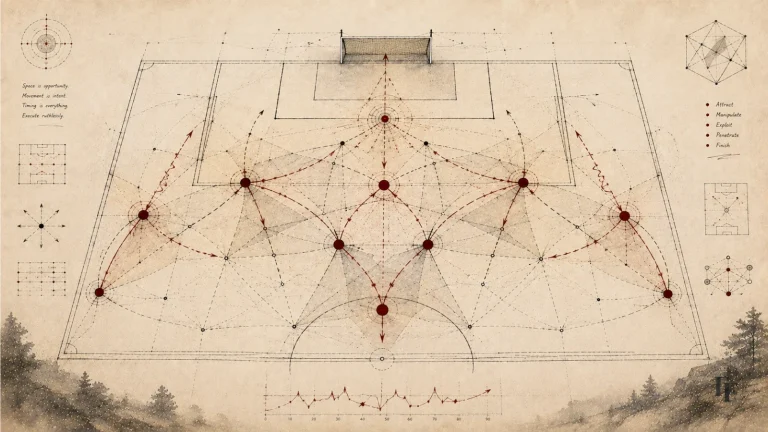
The attacking midfielder serves as the creative engine of the side, operating in high-value spaces to unlock compact defensive structures. Tasked with executing lethal, line-breaking passes, their primary objective is to convert possessional control into clear goal-scoring opportunities. This role demands technical precision in confined areas, exceptional spatial awareness, and supreme composure under intense pressure.
Without a functioning creative presence in advanced central areas, teams often struggle to turn possession into tangible threat. Modern tactical frameworks typically utilize one of three specialized attacking profiles:
The Classic 10
Operating in the pocket of space between the opponent’s midfield and defensive lines, the classic playmaker relies on elite vision and soft touch. Positioned close to both the central support and the forward line, they use precise, short-range passing to pick apart low blocks.
Dennis Bergkamp elevated this role at Arsenal, using sublime touch and spatial intelligence to dismantle low blocks from the edge of the box.
The Shadow Striker
Functioning as a hybrid between an advanced midfielder and a second forward, the shadow striker operates higher up the pitch. They make late, aggressive runs into the penalty box, support the main striker by drawing away center-backs, and chip in with high-volume goal scoring.
Wayne Rooney mastered this hybrid profile at Manchester United, combining relentless work rate with explosive late runs into the box to provide high-volume goalscoring alongside a main striker.
The False 10
While starting in a traditional playmaker position on paper, the false 10 frequently drops deep into the central third to receive the ball. This movement draws opposing central defenders or holding midfielders out of shape, opening up key attacking channels for wingers and overlapping runners to exploit.
Mesut Özil redefined spatial creation at Arsenal, repeatedly dropping deep from advanced areas to pull central defenders out of position and open channels for his teammates.
The Wide Midfielder
Operating along the touchlines, wide midfielders are tasked with stretching the opposition’s defensive shape horizontally. By holding maximum width, they pull full-backs away from the center of the pitch, opening up valuable half-spaces for central and attacking midfielders to attack.
This role demands relentless work rate, top-end speed, and high-volume crossing delivery. Wide midfielders must be proficient in one-on-one scenarios, isolating defenders to generate delivery opportunities into the box. Equally important is their defensive responsibility: they track back continuously to support their full-backs, forming double-teams defensively before sprinting forward to lead wide transitions the moment possession is regained.
David Beckham set the gold standard for the wide midfielder during his tenure at Manchester United. Combining an extraordinary work rate with legendary crossing accuracy, he stretched opposition defenses horizontally while consistently tracking back to support his full-back.
The Symphony of Control
A synchronized midfield unit controls the rhythm, tempo, and spatial dimensions of a football match. Failing to win the central battle usually means forfeiting influence over the outcome entirely. In elite football, midfield dominance is about establishing absolute control, dictating terms, and forcing the opposition into unfamiliar tactical territory. Mastering these distinct roles elevates a side from functional to dominant, turning specialized skill sets into an unshakeable tactical structure.
// Editorial Series: Positional Mastery
Vol. 02 – Now Reading
02. The Midfield
The Heartbeat of the Team
(Un)laced
A curated look at the moments that mattered alongside stories and insights worth your time.