Hydration and Velocity: The Science of Modern Pitch Preparation
The Turf as Tactical Infrastructure
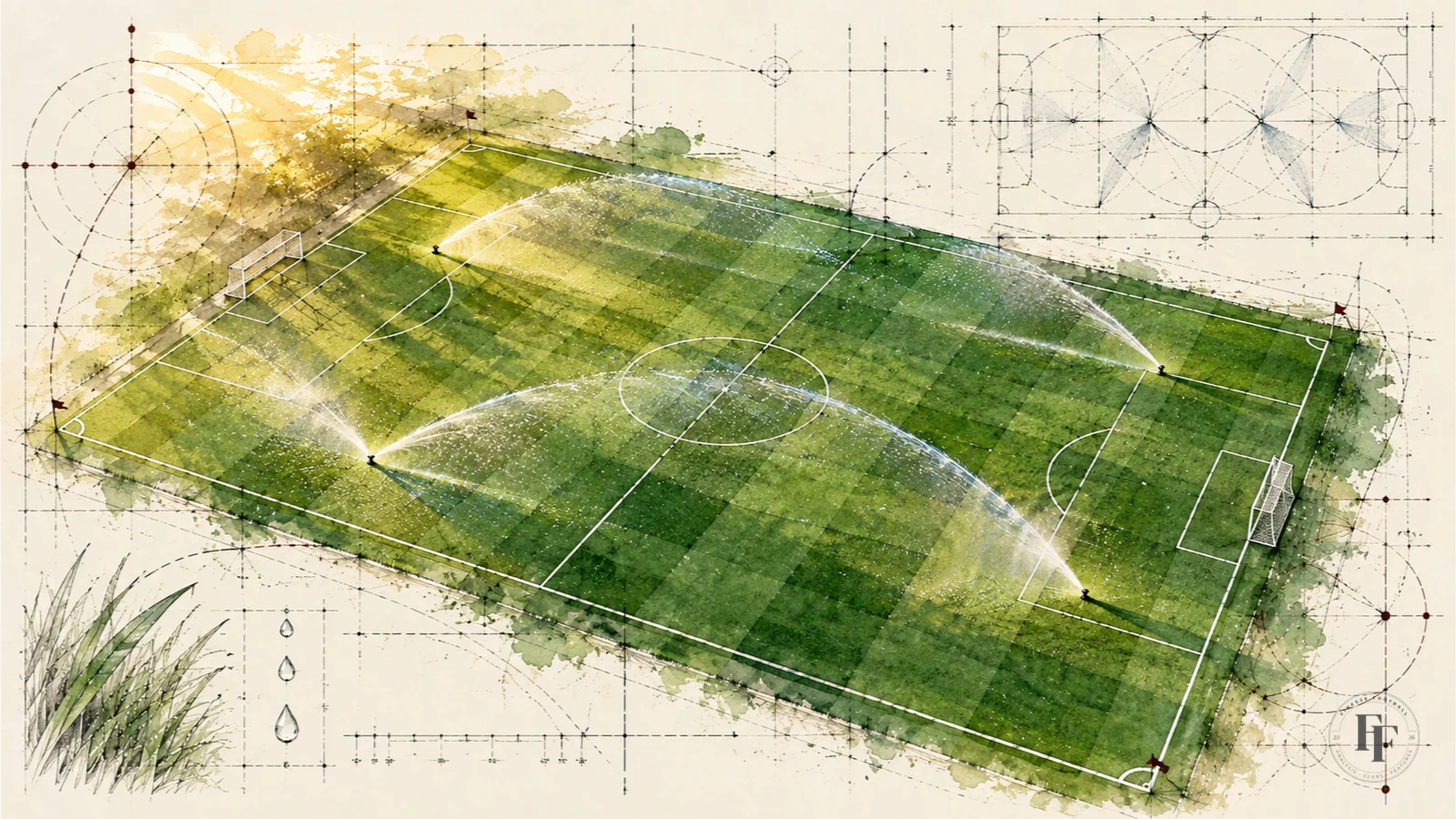
In elite football, every variable capable of influencing match outcomes is subject to rigorous manipulation. While pitch dimensions and grass heights are governed by strict regulatory limits, the physical state of the playing surface remains a dynamic tactical variable. The sight of automated sprinklers saturating the grass minutes before kickoff is often viewed by casual spectators as routine turf maintenance. In reality, it represents a deliberate intervention in surface mechanics.
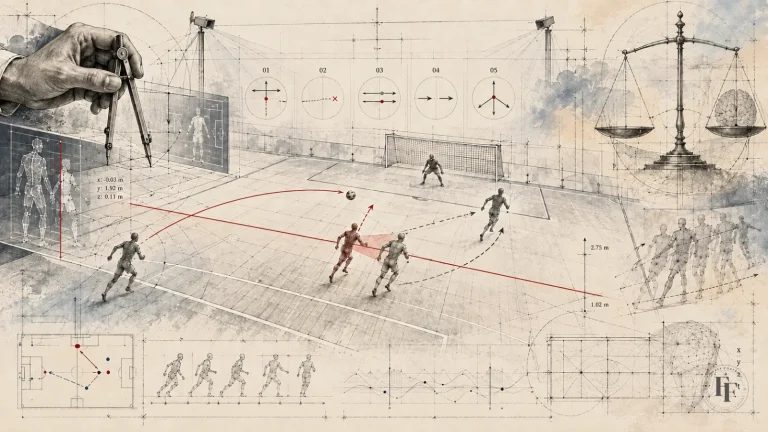
The decision to hydrate a pitch directly alters the kinetic environment of the match. By reducing friction between the ball and the grass blades, grounds crews manipulate rolling velocity, rebound behavior, and player traction. For teams reliant on rapid positional play and high-tempo passing combinations, pitch hydration is not an aesthetic choice; it is a foundational component of match strategy.
OF FRICTION
BALL VELOCITY
REACTION WINDOWS
Friction Coefficients and Kinetic Transfer
The primary objective of pre-match and halftime watering is to alter the coefficient of friction on the playing surface. When a ball rolls across dry turf, individual grass blades create drag against the outer casing, absorbing kinetic energy and steadily decelerating the pass.
Applying a controlled layer of surface moisture introduces a thin liquid boundary between the ball and the grass. This boundary yields several distinct mechanical effects:
- Reduced Rolling Resistance: Passes travel further and maintain higher velocity with less initial force required from the passer.
- Minimized Vertical Bounce: Dampened grass blades flatten slightly under impact, reducing micro-bounces and producing a smoother trajectory.
- Predictable Ball Dispersion: Moisture creates a uniform sliding phase, allowing players to anticipate exact ball speed when receiving under pressure.
For teams built on short, rapid passing combinations, these micro-adjustments in ball speed are critical. In tight central corridors, a delay of mere milliseconds caused by a slowing pass on dry grass allows pressing defenders to close down passing lanes. A slick, hydrated surface ensures that line-breaking passes reach their target at maximum velocity, keeping the receiving player ahead of the opposition’s defensive block.
The Regulatory Framework and Competitive Parity
Because surface condition directly impacts match flow, regulatory bodies strictly oversee pitch preparation to prevent gamesmanship. Historically, host clubs utilized selective watering to create asymmetrical advantages, dampening specific wide channels to suit their own wingers while leaving central corridors dry to disrupt opposition playmaking.
To ensure competitive equity, modern governing bodies enforce precise operational protocols. UEFA Champions League regulations mandate that pitch watering must be executed evenly across the entire playing surface. Furthermore, watering schedules are bound by strict timeframes:
- Pre-Match Window: Pitch hydration must conclude a fixed number of minutes prior to kickoff (typically finishing 60 minutes before kickoff) to allow excess surface water to settle.
- Halftime Window: Watering during the interval is limited to a maximum duration (typically 5 to 7 minutes) and must cover the entire pitch uniformly, subject to referee approval.
- Schedule Communication: The home club must formally declare and communicate the pitch-watering schedule during the match organizational meeting, ensuring both technical staff and managers are aware of the surface preparation.
These regulations ensure that while clubs can optimize the pitch for high-tempo football, they cannot manipulate specific zones to intentionally compromise the opponent’s tactical setup.
Structural Balancing: Traction vs. Velocity
Determining the precise volume of water applied to a pitch requires a delicate balance between ball speed and player safety. Excess surface moisture introduces significant operational risks that can undermine a team’s tactical structure.
If a pitch is over-saturated, water accumulates at the root zone, softening the topsoil and compromising the structural stability of the turf. This leads to two distinct structural hazards:
- Loss of Rotational Traction: Players slipping or losing footing during sharp directional changes, acceleration, or sudden deceleration.
- Pitch Divoting: The tearing away of large turf sections, which creates uneven surface contours and unpredictable ball bounces later in the match.
Groundskeeping staffs utilize sophisticated moisture sensors, soil drainage data, and localized weather metrics to calculate the exact saturation threshold. The goal is to apply sufficient water to lubricate the grass blades without saturating the underlying soil layer. This creates a surface that maximizes ball velocity while retaining firm structural resistance underfoot for rapid plant-and-cut movements.
The Strategic Dimension of Surface Manipulation
The historical precedent for treating the playing surface as a tactical tool is well documented across European football. During Pep Guardiola’s tenure at Barcelona, pitch specifications were integrated directly into match preparation. Pitch inspectors and grounds staff monitored atmospheric humidity, temperature, and wind speed, tailoring grass height and irrigation levels to optimize the team’s intricate passing circuits.
Conversely, teams facing possession-dominant opposition have historically opted to minimize watering and allow grass length to reach maximum allowable limits. By increasing drag and introducing surface unpredictability, the defending side deliberately degrades ball velocity, neutralizing the opposition’s technical superiority and forcing a slower, more physical contest.
Ultimately, the pre-match sprinkler routine is an exercise in applied physics. By engineering the exact mechanical interaction between the ball and the ground, clubs establish the kinetic parameters of the match long before the opening whistle.
(Un)laced
A curated look at the moments that mattered alongside stories and insights worth your time.