The Architectural Rise of Andoni Iraola: Pressing Triggers, Space Dominance, and Premier League Stature
The Architectural Vision
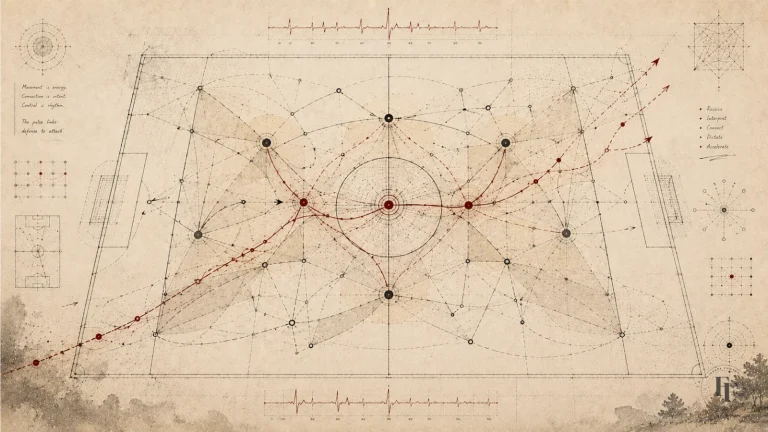
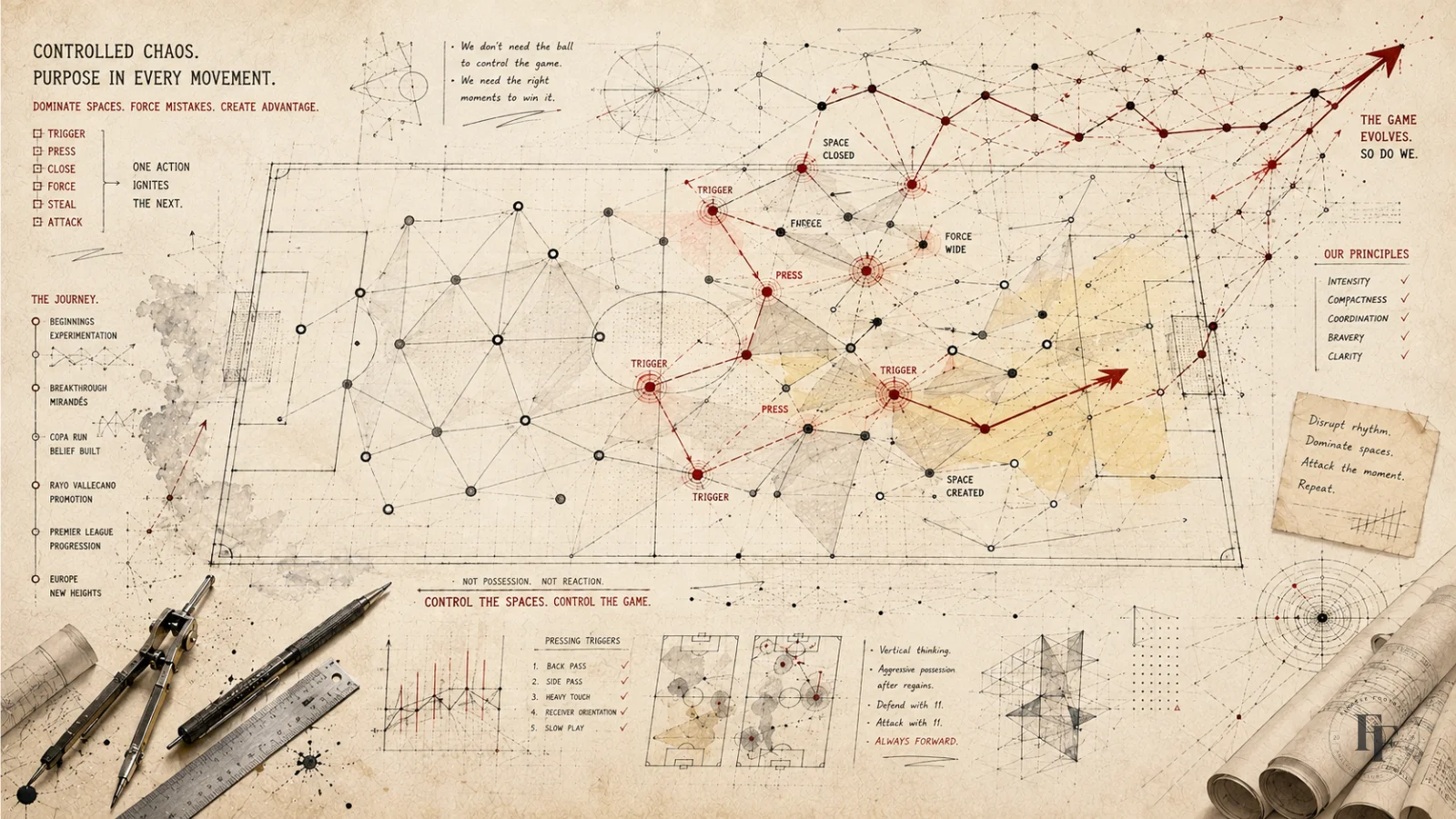
Long before establishing himself as one of the most respected managers in top-flight football, Andoni Iraola’s tactical perspective was molded by a fundamental shift on the pitch. While he operated primarily as a right-back throughout his distinguished playing career, a late stint under Patrick Vieira at New York City FC saw him deployed as a defensive midfielder. That central vantage point granted him a 360-degree view of the pitch, reshaping how he envisioned space, pressure, and structure. Rather than viewing football through the mainstream lens of passive ball retention, Iraola developed a philosophy rooted in spatial dominance, pressing triggers, and relentless verticality.
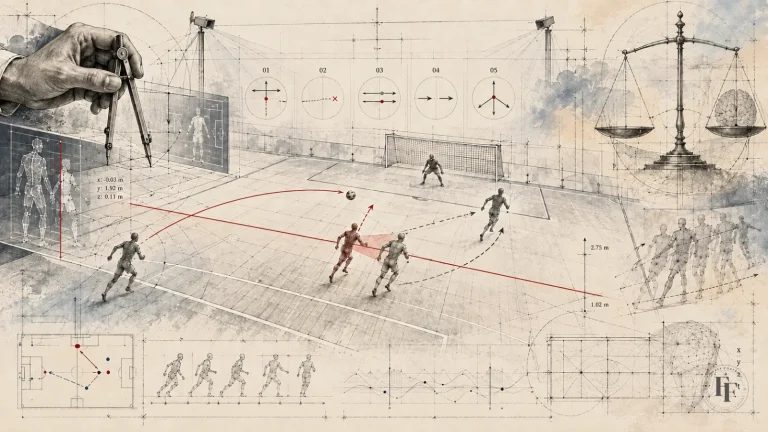
Forged in the Basque region and refined on the touchlines of European football, his methodology reflects key influences from mentors Marcelo Bielsa and Ernesto Valverde. Yet Iraola is far from a mere emulator. His curiosity extended beyond traditional pitch boundaries, borrowing concepts from American sports like the NFL and NBA to design detailed, play-by-play defensive schemes and spatial overloads. The result is a distinct tactical identity that prioritizes controlling where and how the opponent plays, transforming underdogs into proactive, disruptive entities.
The Cypriot Testing Ground: AEK Larnaca
Following his retirement from professional football in 2016, Iraola earned his coaching credentials and began his managerial journey in 2017 at Basque youth club Antiguoko. This was the same grassroots academy where he had started as a boy, and which famously helped produce peers like Xabi Alonso and Mikel Arteta.
By the summer of 2018, he was appointed to lead Cypriot side AEK Larnaca. Though his domestic tenure ended prematurely in January 2019 following a difficult winless run, his European campaign served as a crucial laboratory for his evolving ideas. During the Europa League group stage, Iraola’s system generated an average of 11.2 shots per game, with high-intensity turnovers in the attacking third accounting for 40% of those scoring opportunities. His side averaged just 48.2% possession across six group matches, signaling early on that he had little interest in empty ball retention. A 7-0 aggregate victory over Sturm Graz in the qualifying round provided clear proof of how potent his aggressive, high-turnover approach could be when executed with intent.
Proving the Blueprint: Mirandés and the Giant-Killing Run
In July 2019, Iraola returned to Spain to take charge of newly promoted Segunda División side CD Mirandés. His opening ten matches yielded a solitary win alongside four defeats, but his tactical adjustments bore fruit over the second ten-game block, where Mirandés collected six wins and lost just twice, ultimately securing an 11th-place league finish.
The true showcase of his early managerial pedigree came in the Copa del Rey, where he guided Mirandés to a historic semi-final berth by eliminating La Liga heavyweights Celta Vigo, Sevilla, and Villarreal. Rather than retreating into a low block, Iraola instructed his side to go toe-to-toe with elite opponents, using tailored pressing triggers to force high-value errors.
| Metric | Mirandés vs Celta Vigo (2–1) | Mirandés vs Sevilla (3–1) | Mirandés vs Villarreal (4–2) |
|---|---|---|---|
| Possession | 34% – 66% | 33% – 67% | 37% – 63% |
| Passing Accuracy | 66% – 83% | 61% – 78% | 72% – 82% |
| Shots on Target | 41% – 31% | 60% – 43% | 38% – 47% |
| Interceptions | 20 – 10 | 4 – 11 | 8 – 5 |
| Tackles | 34 – 37 | 14 – 20 | 16 – 21 |
| Aerials Won | 14 – 16 | 17 – 23 | 15 – 20 |
| Long Balls | 100 – 66 | 65 – 80 | 72 – 63 |
These performance metrics illustrate a clear tactical pattern. Mirandés consistently ceded possession, yet generated equal or superior shot quality by unsettling their opponents’ buildup phase. By tailoring pressing traps specifically to each opponent’s tendencies, Iraola created narrow windows to dispossess top-flight clubs and launch immediate, direct transitions.
Establishing Stability: The Rayo Vallecano Era
Iraola took over at Rayo Vallecano in August 2020, inheriting a club that had spent decades shifting between divisions. In his debut campaign, he guided Rayo to a 6th-place finish in the Segunda División before navigating the promotion play-offs to secure top-flight status. He supplemented this by leading the club to its first Copa del Rey semi-final appearance in four decades.
Upon entering La Liga for the 2021/22 season, Iraola reinforced his high-intensity structure, steering Rayo to a comfortable 12th-place finish. The highlight of the campaign was a pair of 1-0 victories over Barcelona. In their home meeting, Rayo restricted Barcelona to just a single shot on target, utilizing aggressive wide traps to force low-value crosses that were routinely cleared by Rayo’s center-backs. In the reverse fixture at the Camp Nou, Iraola altered the structure slightly, coupling intense mid-block pressure with a precise offside trap that caught Barcelona offside six times and registered 12 interceptions.
The 2022/23 campaign brought further tactical consolidation. Rayo opened the season with a 0-0 draw at Camp Nou, forcing 10 interceptions, before claiming a 2-1 win in the return match. Across four encounters against Barcelona during his tenure, Iraola remained unbeaten, taking 10 points out of a possible 12. He recorded a similar statement victory against city rivals Real Madrid, earning a 3-2 win at home by limiting Real to just two shots on target while creating seven of their own.
Under his leadership, the 14,000-capacity Campo de Fútbol de Vallecas became an exceptional venue for the host side, with Rayo losing only six home matches in 2021/22 and just five in 2022/23. He established a sustainable structural foundation that outlasted his tenure.
Premier League Mastery: High Pressing and Vertical Speed
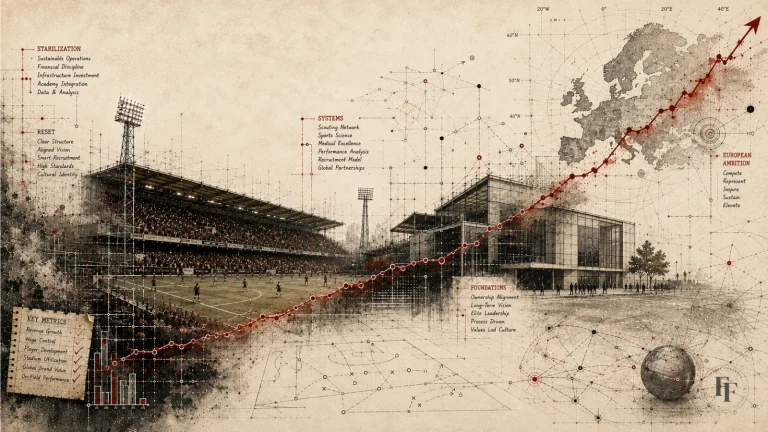
Upon his appointment at Bournemouth, Iraola set out to overhaul the squad’s operational identity. Moving away from the deeper defensive block of the previous regime, with an average PPDA (passes allowed per defensive action) of 15.6, he introduced an aggressive, forward-defending framework.
Though his opening campaign yielded a 15th-place finish as the team adapted, his first full season in charge (2023/24) demonstrated the true potential of his methods. After navigating a tough start with one win in ten matches, Bournemouth rallied to finish 12th with 48 points. The team’s PPDA dropped to 10.7, while their direct speed upfield reached an average of 1.96 meters per second, making them the fastest, most direct transition side in the Premier League.
Here, his fascination with American sports principles became fully evident. Iraola viewed defensive transitions much like an NFL defensive coordinator or an NBA full-court press: forcing directional turnovers into predefined zones where his players held an immediate structural advantage.
By the 2024/25 season, Bournemouth refined this approach into an elite defensive weapon. They recorded 337 high turnovers, the second-highest in the Premier League, with 68 resulting in shots and 10 in goals. Off the ball, their league-leading 9.9 PPDA proved that match control could be exerted entirely without dominance of the ball. Bournemouth finished 9th with 56 points.
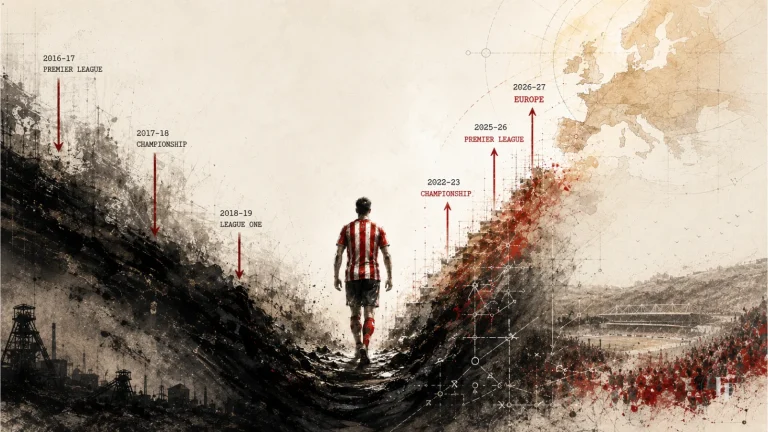
The 2025/26 campaign represented the peak of this development. Bournemouth ranked third in the league for high turnovers with 298, and fifth in PPDA at 11.1. They also generated an xG (expected goals) figure of 61.90, which stood as the fifth-highest total in the league. High-profile victories over Arsenal, Liverpool, Tottenham, and Newcastle highlighted a historic season that culminated in a 6th-place finish, a club-record 57 points, an 18-match unbeaten run, and an inaugural qualification for European football.
The Proving Ground of Innovation
In an era where long spells of low-risk possession are often treated as the default path to success, Andoni Iraola has shown that structured out-of-possession innovation can be equally effective. By instilling clear tactical principles, precise pressing triggers, and continuous vertical threat, he demonstrated that a well-drilled squad can consistently disrupt and outmaneuver elite opposition. His ability to integrate structural replacements seamlessly after losing key players highlights the endurance of his framework. Iraola’s progression from regional football to top-flight success stands as a compelling endorsement of tactical clarity, mutual trust, and uncompromising execution.
(Un)laced
A curated look at the moments that mattered alongside stories and insights worth your time.